
A Bling Mind’s Eye
Last week I attended the UC Berkeley Center for the Science of Psychedelics Conference, States of Consciousness: Psychedelic Discovery and the Edge of Uncertainty, and got way more than I bargained for with my ticket.
I attended the pre-conference event, A Journey Into Consciousness: Michael Pollan and Christof Koch in Conversation, featuring writer Michael Pollan, whose book How to Change Your Mind helped shift the cultural narrative around psychedelics, and renowned neuroscientist Christof Koch. The conversation was moderated by Shayla Love, a New York-based journalist who writes about science, health, and the mind.
As the conversation moved into the Q&A portion, Shayla mentioned that she has Aphantasia and can't visualize images in her mind, not even a red apple when she closes her eyes. She questioned whether people who experience consciousness differently might also have different psychedelic experiences, and whether those differences shape what we learn about consciousness itself.
Wait. People actually SEE an apple when they close their eyes? 🍎
As I sat there in the auditorium, I started questioning something I'd never thought to question before. If other people can actually see images in their minds, what does that mean about how my own mind works?
The next day, I attended the Science of Imagination panel with Cassandra Vieten & Fabrice Guerrier, where we went through an imagination exercise. Then we were asked to share what we saw with the person sitting next to us.
I turned to the man on my left and shared that I thought I might have Aphantasia after the talk the night before. I asked him if he actually saw an apple when he closed his eyes. He indeed confirmed that he did and described what he saw.
In that moment, he confirmed what I'd suspected the night before. What I'd felt deep within myself was now confirmed as a profound truth about my own consciousness.
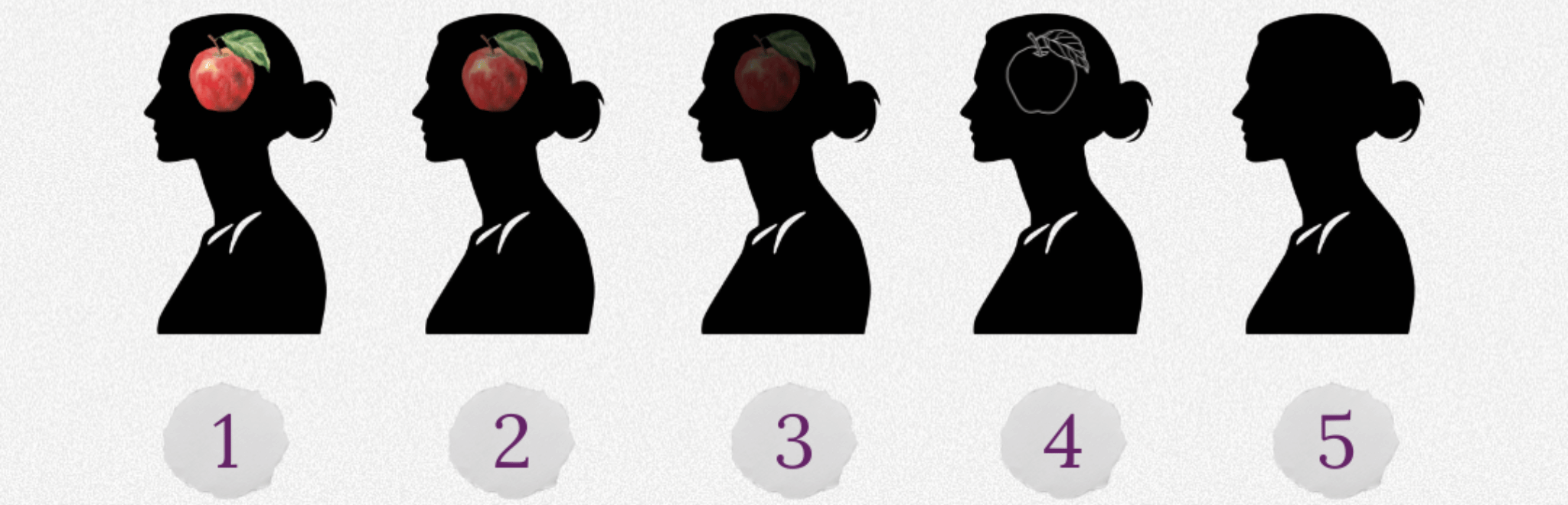
What exactly is Aphantasia? It's a "blind mind's eye," which means I cannot voluntarily visualize images in my mind.
There's a common visualization exercise: close your eyes and think of an apple. What do you see? Me? I see nothing. Total darkness. I’m #5.
I knew this was big. Really big. And that there would be a lot to process. So instead of trying to “figure it all out,” like I tend to do, I consciously slowed down and allowed myself to be present with whatever wanted to unfold.
And what unfolded next was exactly what happens when you surrender and trust, something psychedelics have deeply ingrained in my being.
After the first imagination exercise, we were asked to turn to the person on our other side for another imagination discussion.
I turned to the man on my right and shared that I'd just discovered I have Aphantasia. And guess what?
He told me he'd discovered his own Aphantasia during an Ayahuasca ceremony in South America. With only about 1% of the population seeing total darkness, here was someone who'd experienced the same realization about his own mind, and through psychedelics, no less. Now my mind was really blown!
There's something quite beautiful about discovering this difference in how my brain works while literally sitting between someone who can visualize and someone who can't. And at a States of Consciousness conference, no less!
In my work with psychedelics and consciousness, I've come to deeply believe there are no coincidences. It felt like the Universe was offering me a hand, saying, "You're not alone."
In that moment, I felt comforted knowing I wasn't.
As I sat in that room surrounded by some of the most brilliant minds studying consciousness, I wondered: Was I having an existential crisis, or was everything that had felt off my entire life finally making sense?
I’ve always had this deep inner feeling that I was missing something; I didn’t get the joke, I didn’t fit in, or I didn’t understand. I explored the obvious possibilities, even getting tested for ADHD, but that wasn't it. It always felt like the rest of the world knew some secret to life that I was desperately trying to figure out.
Things were starting to make sense, but I also knew some deep processing was ahead.
It wasn't until the conference ended and I was back home, with time to really process everything, that the sadness started to set in.
Every time I closed my eyes, I felt it. For 48 years, I'd closed my eyes and seen nothing, never realizing other people were seeing images in their minds. Now, every time I close my eyes, I'm reminded of something I never knew I was missing.
And then came another realization. I may never fully understand what a visual psychedelic experience can be.
There's a great sense of loss in realizing that what I thought was a typical psychedelic experience may have been completely different from what others experience.
For 35 years, I've explored psychedelics, consciousness, and the mysteries of my own mind, always wondering why I wasn’t experiencing the “visuals” that people kept describing. Maybe that’s why I kept experimenting? I thought I just wasn’t doing enough (I assure you, I have!), but now that I have this missing piece of my personal puzzle, my picture is becoming crystal clear.
And that is a complete and total head fuck for somebody who has now dedicated their life to working in psychedelics.
And the irony of it all?
I’ve spent so much of my life searching for answers through psychedelics. In the end, it was my curiosity about consciousness that led me to one of the most profound discoveries about myself.
Just not in the way I imagined.
Oh wait, I literally can’t imagine! LOL
And now I find myself integrating an experience that didn't involve taking a psychedelic at all.
Integration is essential for psychedelics, but it's also important for other profound life experiences.
I'm grateful to have discovered this now, at a time in my life when I have the tools to sit with the uncertainty, the sadness, and everything else that comes along with it. I know I wouldn't have had these tools earlier in my life, and I've developed so many of them through my own personal work and my work as an Integration Coach.
And truthfully, how fucking cool is that? I learned something life-changing about my own mind listening to a conversation with Michael Pollan, who literally wrote the book How to Change Your Mind, and neuroscientist Christof Koch.
I'm incredibly grateful to Shayla for sharing her own experience with Aphantasia and bringing this question into the conversation about psychedelics and consciousness. By speaking openly about something so personal, she opened up a whole new conversation about how differently we experience consciousness. And for me, that one question completely changed my life.
I mean, if you're going to discover something this profound about yourself, what better place than in a room full of scientists, researchers, and psychonauts trying to understand the mysteries of consciousness?
Would I change how my mind works? I don't know. I'm certainly curious about how everyone else's mind works, but honestly, the thought of having images floating around in my head sounds absolutely exhausting.
And now my Integration begins. How do I keep coming back, again and again, to this knowledge and use it to better understand myself? How might this help explain why I've always felt like I was experiencing the world through a different lens?
And now that I understand something about how my mind works, what else might I discover about myself that I've never thought to question?
This will be an ongoing experiment with my own mind and consciousness. I don't have the answers yet, and I'm not trying to figure them all out right now. I'm allowing this experience to unfold, just as I did sitting in that conference room, remaining open to what wants to reveal itself in due time.
I've spent my life searching for answers about why I've always felt different. And now that I've found what I believe is that key missing piece, I can't help but wonder what else I have yet to discover about myself.